,

Barracuda ESG Zero-Day Vulnerability

TLP

TLP CLEAR

Author

David Deflache

Summary

In May 2023, Barracuda disclosed a zero-day vulnerability (CVE-2023-2868) exploited by UNC4841, a suspected Chinese espionage actor. UNC4841 targeted Barracuda Email Security Gateways (ESG) since October 2022, using malicious email attachments. They deployed code families (SALTWATER, SEASPY, SEASIDE) to infiltrate and maintain control, often disguising as legitimate ESG modules. UNC4841 aggressively sought specific data and conducted lateral movement within victim networks. Barracuda initiated containment and remediation efforts in May 2023, prompting UNC4841 to adapt. The campaign impacted public and private sectors globally, with government agencies among the victims. Mandiant advises isolation and replacement of compromised appliances and further network investigation.

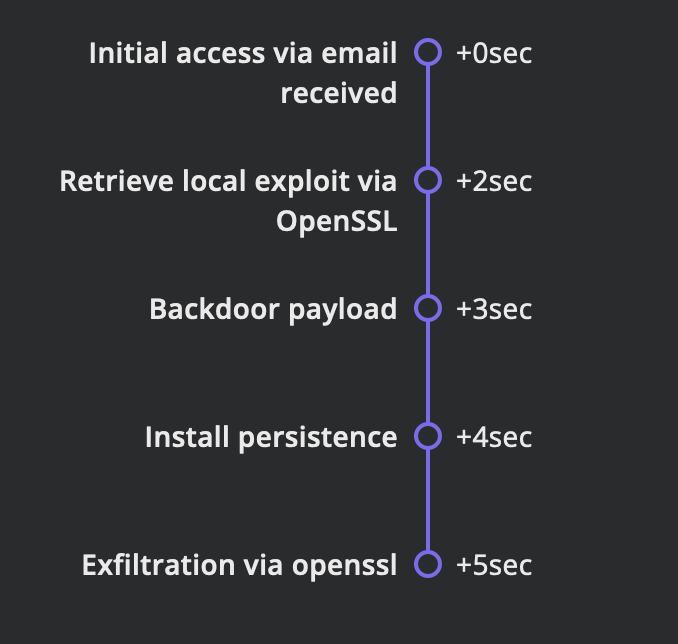
TIMELINE
DATA

We are consistently providing data for attacks weekly hoping to contribute raising awareness to threats from their data.

CATEGORY

Dataleak

MITRE ATT&CK

[contact-form-7 id=”f245613″ title=”Newsletter”]

T1003.001 – LSASS Memory T1005 – Data from Local Syste T1012 – Query Registry T1016 – System Network Configuration Discovery T1018 – Remote System Discovery T1021.001 – Remote Desktop Protocol T1021.002 – SMB/Windows Admin Shares T1021.004 – SSH T1027 – Obfuscated Files or Information T1033 – System Owner/User Discovery T1036.005 – Masquerading: Match Legitimate Name or Location T1041 – Exfiltration Over C2 Channel T1047 – Windows Management Instrumentation T1053.005 – Scheduled Task/Job: Scheduled Task T1055 – Process Injection T1057 – Process Discovery T1059 – Command Line Interface T1059.001 – Command and Scripting Interpreter: PowerShell T1059.003 – Windows Command Shell T1069 – Permission Groups Discovery T1069.001 – Local Groups T1069.002 – Domain Groups T1070.004 – File Deletion T1071 – Application Layer Protocol T1071.001 – Web Protocols T1078 – Valid Accounts T1082 – System Information Discovery T1083 – File and Directory Discovery T1087.002 – Domain Account T1105 – Ingress Tool Transfer T1110.001 – Brute Force: Password Guessing T1112 – Modify Registry T1140 – Deobfuscate/Decode Files or Information T1190 – Exploit Public-Facing Application T1204.002 – User Execution: Malicious File T1210 – Exploitation of Remote Services T1218.011 – System Binary Proxy Execution: Rundll32 T1219 – Remote Access Software T1482 – Domain Trust Discovery T1486 – Data Encrypted for Impact T1490 – Inhibit System Recovery T1518.001 – Security Software Discovery T1543.003 – Create or Modify System Process: Windows Service T1566.001 – Phishing: Spearphishing Attachment T1574.002 – DLL Side-Loading